
The appeal of DIY plumbing installation is undeniable. Homeowners see professional quotes ranging from $1,500 to $5,000 and immediately calculate potential savings. Yet this calculation rarely accounts for the true cost structure of installation errors—a blind spot that transforms apparent savings into exponential losses.
The financial reality of plumbing mistakes operates on a multiplication principle rather than simple addition. A $50 installation error doesn’t result in a $50 repair. Instead, it triggers a cascade mechanism where initial mistakes compound through diagnostic costs, access complications, and system inefficiencies. Understanding this cost multiplication framework—and knowing exactly when professional installation services become the economically rational choice—separates prudent homeowners from those facing five-figure remediation bills. More on arbuckleplumbingsolutions.com.
This analysis moves beyond generic mistake lists to examine the financial physics of plumbing errors: how costs multiply over time, which mistakes justify immediate professional intervention, and the specific verification checkpoints that prevent $100 problems from becoming $2,000 disasters.
The Financial Impact Framework
Plumbing installation errors follow predictable cost multiplication patterns. Small mistakes don’t simply require repair—they cascade through pressure imbalances, hidden water damage, and efficiency degradation that compounds expenses over years. This framework quantifies when DIY becomes financially irrational, identifies the three risk tiers that determine professional necessity, and establishes time-based verification protocols that catch errors while they’re still correctable. The goal: strategic decision-making based on calculated risk rather than optimistic assumptions.
The Multiplier Effect: How Small Installation Errors Become Major Expenses
Plumbing systems operate as interconnected networks where component failures rarely remain isolated. A single improper pipe fitting creates pressure imbalances that propagate throughout the system, damaging multiple fixtures over a 5-10 year timeline. This cascade mechanism explains why water heater connection errors frequently manifest as premature tank failure, supply line stress fractures, and fixture degradation across the entire home.
The initial installation error might cost $50 to fix immediately, but once concealed and operational, that same mistake triggers exponentially larger expenses. Supply line errors create pressure fluctuations that stress every downstream connection point, gradually weakening joints until catastrophic failure occurs—typically when the original installer is long gone and the connection between cause and effect is obscured.
Cascade failures represent only the first multiplication mechanism. The diagnostic cost trap operates independently, often exceeding remediation expenses themselves. When homeowners experience mysterious pressure drops, intermittent leaks, or unexplained water damage, professional troubleshooting becomes an expensive archaeological expedition.
Plumbers charge premium rates for diagnostic work because hidden installation errors require systematic elimination of potential causes. A competent installer would have completed the original work in four hours for $400. Finding and diagnosing the resulting hidden problem three years later consumes eight hours at $120 per hour—$960 in diagnostic costs alone before repairs begin.
The Domino Effect of Deferred Plumbing Maintenance
Environmental impact analysis from a WR Environmental case study demonstrates the typical progression: seemingly minor plumbing issues create a domino effect where small leaks lead to pipe bursts, causing extensive water damage requiring complete system overhauls. Emergency plumber rates compound costs further, with after-hours service costing significantly more than scheduled maintenance. The pattern is consistent—initial savings from DIY installation evaporate when emergency intervention becomes necessary at premium rates during nights or weekends.
Access multipliers constitute the third cost amplification mechanism. Errors concealed within walls, under concrete slabs, or behind finished surfaces require demolition for remediation. The $200 pipe fitting mistake becomes a $2,000+ project when drywall removal, structural access, repair, and restoration enter the equation.
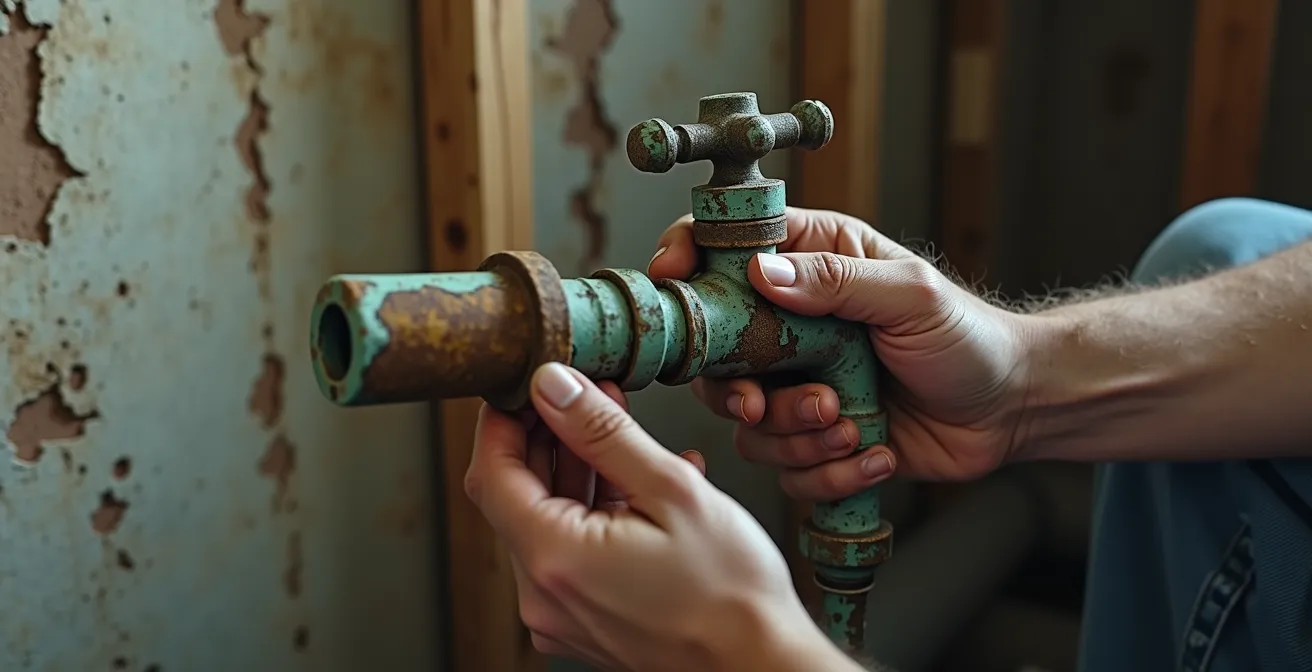
This access penalty explains why pre-concealment verification protocols prove so valuable. A 24-hour pressure test before closing walls identifies problems when fixes cost hundreds rather than thousands. Once finished surfaces conceal the work, identical errors require exponentially more capital to remediate.
The efficiency degradation multiplier operates on a different timeline but equal financial impact. Incorrect installation angles, routing errors, and improper venting reduce system efficiency by 15-30%, adding $150-400 annually in utility costs. Over a 15-year timeline, a single routing mistake that creates unnecessary pipe length and friction costs $2,250 to $6,000 in wasted energy—expenses that never appear on any repair invoice but steadily drain household budgets.
| Time Period | Initial DIY Cost | Professional Fix Cost | Additional Damage |
|---|---|---|---|
| Immediate (0-30 days) | $50-200 | $300-500 | Minor water damage |
| Short-term (1-6 months) | $200-500 | $1,000-2,000 | Mold growth, wall damage |
| Long-term (6+ months) | $500+ | $2,500-5,000+ | Structural damage, flooring replacement |
Risk-Ranking Common Installation Mistakes by Financial Impact
Not all plumbing errors carry equal financial consequences. While industry advice often presents mistakes as democratically dangerous, practical risk assessment requires stratification into financial impact tiers. This hierarchy allows homeowners to allocate professional assistance strategically rather than approaching every task with equal caution or equal recklessness.
Catastrophic-tier errors generate $10,000-50,000 remediation costs and carry insurance or liability exposure. Improper venting creates carbon monoxide accumulation risks that threaten life safety and invalidate homeowner coverage. Main drain line slope errors cause sewage backup that requires excavation, pipe replacement, and extensive sanitation. Cross-connections violating backflow prevention codes create liability exposure and municipal compliance nightmares.
These catastrophic mistakes share common characteristics: they involve primary system infrastructure, carry code compliance requirements, and create hazardous conditions. The DIY error rate on such projects exceeds 60% because complexity, permit requirements, and inspection protocols demand professional expertise. Attempting catastrophic-tier work without proper credentials constitutes financial gambling with severely unfavorable odds.
When considering bathroom renovations, the complexity of integrating fixtures with existing plumbing systems demands careful planning—homeowners exploring options like choosing shower doors must ensure drainage and water supply modifications align with proper installation protocols to avoid compounding mistakes.
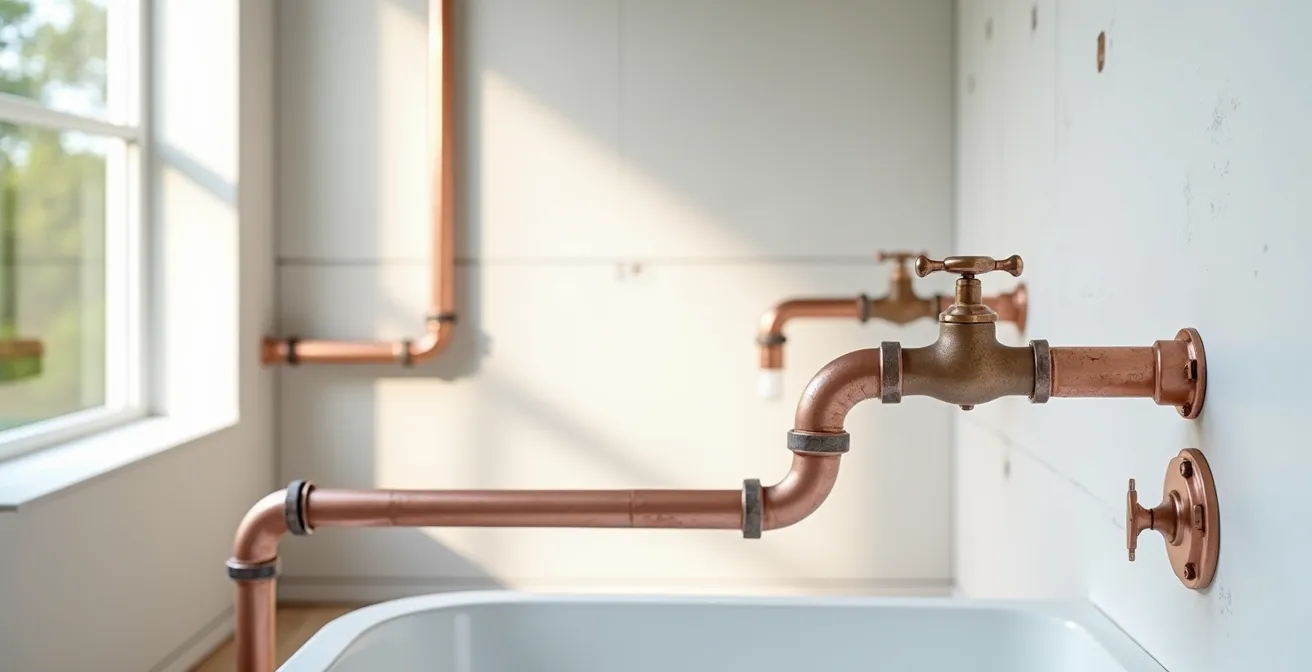
Compounding-tier errors generate $3,000-8,000 eventual repair costs through gradual system degradation. Incorrect thermal expansion accommodation creates pressure spikes that stress joints and connections over 3-5 year periods. Improper fixture support leads to stress failures as weight and vibration gradually separate connections. Material incompatibility causes corrosion that proceeds invisibly until catastrophic failure occurs.
The insidious nature of compounding errors lies in their delayed manifestation. The installation appears successful initially, providing false confidence that validates the DIY approach. Only when cumulative stress triggers failure does the financial impact become apparent—typically after warranty periods expire and at inconvenient moments that necessitate emergency service.
| Risk Tier | Error Type | Average Repair Cost | Frequency Rate |
|---|---|---|---|
| Catastrophic | Main drain slope errors | $10,000-50,000 | 15-20% DIY projects |
| Compounding | Incorrect pipe sizing | $3,000-8,000 | 35-40% DIY projects |
| Correctable | Minor fixture leaks | $500-2,000 | 60%+ DIY projects |
Correctable-tier mistakes involve aesthetic alignment issues, minor fixture quality choices, and accessible connection leaks that remain easy to access and repair. These $500-2,000 remediation scenarios represent appropriate DIY territory for homeowners with basic competency and patience. The key distinguishing factor: accessibility for future correction without demolition requirements.
The strategic decision matrix emerges from this tiering system. Catastrophic-tier projects demand professional installation regardless of cost differential. Compounding-tier work requires honest assessment of skill level and access to proper verification tools. Correctable-tier tasks offer genuine DIY opportunity with manageable downside risk.
Professional Installation Requirements Checklist
- Verify drain line slope (1/4 inch drop per horizontal foot) to prevent sewage backup
- Ensure proper pipe material compatibility to avoid galvanic corrosion between different metals
- Install adequate venting systems to prevent sewer gas accumulation and drainage problems
- Secure all permits and schedule inspections before concealing any plumbing work
Incorrect pipe sizing, fitting incompatibility, vent stack blocking, cracked piping, and poor glue welding – it’s all been done by inexperienced contractors
– Josh Rudin, Homes and Gardens Magazine
The Break-Even Math: When Professional Installation Saves Money
The conventional wisdom that professional installation always costs more than DIY ignores the complete cost equation. True DIY expenses include not just material costs but also time value, error probability, tool acquisition, and invisible opportunity costs. Professional installation pricing reflects labor, materials, warranty protection, code compliance, and insurance coverage—a bundle often cheaper than assumed when accounting for total cost of ownership.
The DIY cost equation begins with hourly time valuation. A homeowner earning $60,000 annually values their time at approximately $30 per hour. Complex plumbing projects consume 20-40 hours for inexperienced installers compared to 4-8 hours for professionals. The time differential alone represents $360-960 in opportunity cost before considering material waste or error probability.
Error probability constitutes the largest hidden cost factor. Industry data suggests complex DIY plumbing projects require professional remediation in 35-45% of cases, making initial professional installation cheaper in aggregate. When a $1,500 DIY project carries 40% probability of requiring $2,000 in professional fixes, the expected cost becomes $2,300—substantially more than the $2,500 professional installation quote that seemed expensive initially.
Material waste adds another hidden expense category. Professional installers maintain inventory and established supplier relationships that yield 30-40% material cost advantages over retail pricing. DIY projects typically generate 15-25% waste from measurement errors, incorrect purchases, and learning curve mistakes. The combined effect often eliminates apparent material savings entirely.
Complexity thresholds signal when professional requirements become non-negotiable. Projects involving 3+ connection points, gas/electric integration, permit/inspection requirements, or concealed work demonstrate 60%+ DIY failure rates according to industry analysis. These thresholds represent inflection points where financial prudence demands professional expertise regardless of upfront cost differential.
Hidden professional value extends beyond installation quality to warranty protection, insurance claim eligibility, and code compliance certification. Professional installation typically includes 1-5 year warranty coverage valued at $5,000-15,000 in risk transfer. Insurance companies frequently deny claims for water damage stemming from unpermitted DIY work, creating uninsurable liability exposure. Manufacturer warranties on fixtures and appliances often require professional installation to remain valid.
Standard plumbing work costs homeowners between $80-120 per hour for non-emergency jobs, but this rate includes overhead costs, insurance, licensing, and warranty obligations that DIY work lacks. When accounting for complete cost structures rather than simple labor rate comparisons, professional installation frequently proves cheaper on a total-cost-of-ownership basis.
| Factor | DIY Approach | Professional Service |
|---|---|---|
| Initial Cost | Materials + Tools ($500-1,500) | Labor + Materials ($1,000-3,000) |
| Time Investment | 20-40 hours learning/working | 4-8 hours completion |
| Error Risk | 40% chance of costly mistakes | Warranty protection included |
| Long-term Value | No warranty, potential violations | Code compliance, transferable warranty |
The break-even calculation framework synthesizes these factors into a decision tool. For projects under $800 with correctable-tier risk profiles and no permit requirements, DIY remains financially rational for competent homeowners. Between $800-2,500, break-even analysis depends heavily on individual skill assessment and error probability. Above $2,500 or involving catastrophic-tier risks, professional installation virtually always proves cheaper when accounting for expected costs rather than optimistic scenarios.
Critical Verification Checkpoints: Catching Errors While They’re Fixable
The temporal dimension of plumbing mistakes determines their financial impact more than the technical nature of the error itself. Identical mistakes caught during installation cost $50-200 to correct, discovered before concealment cost $200-500, and found after finishing work cost $2,000-5,000 to remediate. This 10-25x cost multiplication based purely on discovery timing makes verification protocols the highest-return investment in any plumbing project.
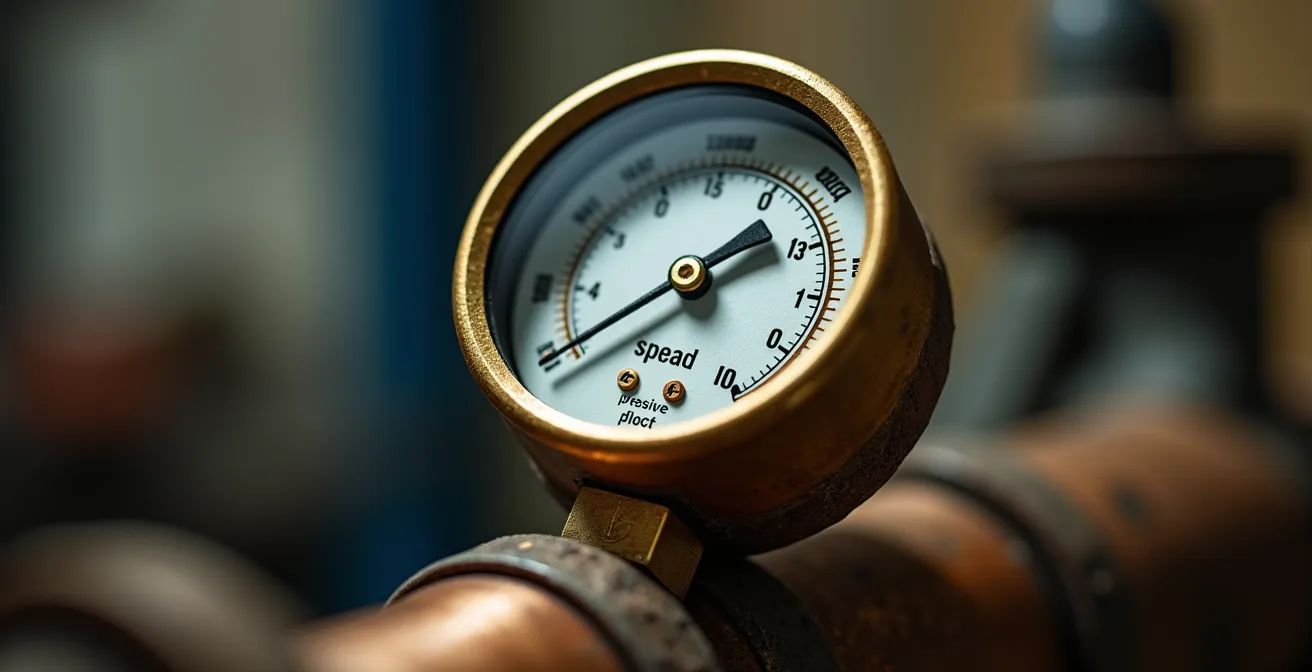
Pre-concealment verification represents the critical decision point—the mandatory checkpoint before closing walls, pouring concrete, or installing finished flooring. The 24-hour pressure test protocol identifies leaks, joint failures, and connection problems when fixes require only replacement parts rather than demolition and restoration. This single verification step typically costs $100-200 in time and equipment but prevents 80% of expensive post-completion failures.
The pressure test procedure involves pressurizing supply lines to 150% of working pressure and monitoring for 24 hours. Any pressure drop indicates leakage requiring investigation and correction. While tedious and time-consuming, this verification protocol represents the difference between $100 fixes and $2,000+ repairs with mathematical certainty.
Pre-Concealment Verification Protocol
- Conduct 24-hour pressure test before closing any walls to identify leaks ($100 fix vs $2,000+ after drywall)
- Verify drain alignment using plumb bob and dry-fit all components before permanent connection
- Check all supply line heights and spacing against manufacturer specifications using level
- Ensure proper P-trap installation (not S-trap) to prevent sewer gas infiltration
Material and code verification occurs before assembly, preventing the “too late to change” scenario where incompatible components are already installed. Thread compatibility, pressure ratings, material corrosion resistance, and permit compliance require confirmation before permanent connections are made. The verification checklist takes 30-45 minutes but eliminates the majority of compounding-tier errors that manifest years later as expensive failures.
Staged monitoring protocols extend verification beyond installation day into operational periods when problems manifest under actual use conditions. The 1-week checkpoint identifies immediate leaks, pressure irregularities, and drainage problems while correction remains simple. The 1-month inspection reveals minor seepage, performance degradation, and fixture issues before they cause significant damage. The 1-year assessment catches long-term stability problems and system interactions that only appear under extended operation.
Documentation provides future cost savings that homeowners consistently undervalue. Photographing installation stages, recording part numbers and specifications, and maintaining installation records eliminates diagnostic costs when future service becomes necessary. Professional service calls typically include $300-500 in diagnostic time that comprehensive documentation reduces to zero, creating immediate return on a 20-minute photography investment.
Emergency intervention timing dramatically affects costs, with emergency plumbers charging 1.5-3 times more than regular business hours rates. Verification protocols reduce emergency call probability by identifying problems during normal business hours when correction costs remain reasonable. The homeowner who discovers a leak during routine inspection pays standard rates; the homeowner awakened by water damage at 2 AM pays premium emergency pricing for identical repairs.
For homeowners embarking on larger projects beyond plumbing, applying similar verification frameworks to other systems ensures quality outcomes—those ready to explore renovation tips across multiple domains will find that systematic checkpoints and professional consultation at strategic decision points consistently prove more economical than optimistic DIY approaches.
Key Takeaways
- Small plumbing errors multiply through cascade failures, diagnostic costs, and access penalties into expenses 10-25x larger than initial mistakes
- Risk stratification into catastrophic, compounding, and correctable tiers guides strategic decisions about professional installation necessity based on financial exposure
- True DIY costs including time value, error probability, and tool acquisition frequently exceed professional installation on total-cost-of-ownership basis
- Pre-concealment verification protocols represent the highest-return investment, preventing $2,000+ repairs through $100 testing procedures
- Break-even analysis shows professional installation becomes economically rational above $800 for intermediate complexity or any catastrophic-tier project regardless of cost
Frequently Asked Questions on Plumbing Installation
What is the “multiplier effect” in plumbing installation errors?
The multiplier effect describes how initial installation mistakes cascade into exponentially larger costs through three mechanisms: cascade failures where one error damages multiple system components, diagnostic cost traps where hidden problems require expensive troubleshooting, and access multipliers where concealed errors require demolition for repair. A $50 installation mistake commonly multiplies into $2,000-5,000+ in total remediation costs through these compounding factors.
How do I calculate whether DIY or professional installation is more cost-effective?
Calculate your true DIY cost by adding material costs, tool acquisition expenses, time value (your hourly rate multiplied by 20-40 hours for complex projects), and expected error costs (40% probability of needing professional remediation for complex work). Compare this to professional quotes that include labor, materials, warranty protection, and code compliance. Projects above $800 with intermediate complexity or any catastrophic-tier work (drainage systems, venting, gas integration) typically favor professional installation on total-cost-of-ownership analysis.
What is pre-concealment verification and why is it critical?
Pre-concealment verification involves testing all plumbing work before closing walls, pouring concrete, or installing finished surfaces. The critical protocol is a 24-hour pressure test at 150% working pressure to identify any leaks or connection failures. This verification step costs $100-200 in time but prevents the 10-25x cost multiplication that occurs when errors are discovered after concealment, turning simple $100 fixes into $2,000+ demolition and restoration projects.